
Full Text of the 4th Amendment to the US Constitution
The right of the people to be secure in their persons, houses, papers, and effects, against unreasonable searches and seizures, shall not be violated, and no Warrants shall issue, but upon probable cause, supported by Oath or affirmation, and particularly describing the place to be searched, and the persons or things to be seized.

4th Amendment Simplified and Summarized
The Founding Fathers were influenced by English common law, which included limits on unreasonable searches. When the Fourth Amendment was ratified on December 15, 1791, it turned those ideas into constitutional rights.
Exceptions to the 4th Amendment
Generally speaking, the 4th Amendment to the United States Constitution forbids searching private properties unless a judge or magistrate has issued a warrant.
There are several exceptions, such as when the property owner gives consent or when there is a threat to public safety.


There is also an exception where evidence or property is in danger of being destroyed. Police do not need a warrant to search abandoned property, areas considered “open fields,” or items clearly visible in plain view.
Some states have extended privacy protections under their own state constitutions to areas not covered by the federal Fourth Amendment.
Fourth Amendment protection
Seizure of property by law enforcement officials is also forbidden under the 4th Amendment unless a warrant has been obtained. Again, specific rules apply.

Get Smarter on US News, History, and the Constitution

The warrant should list the property that the authorities can seize during a search. The search should only be to locate those items and take them away.

Law enforcement cannot seize items not listed in the warrant unless they are in plain view and clearly connected to criminal activity.
Searches and Seizures
The seizure of people requires a different approach by the authorities.
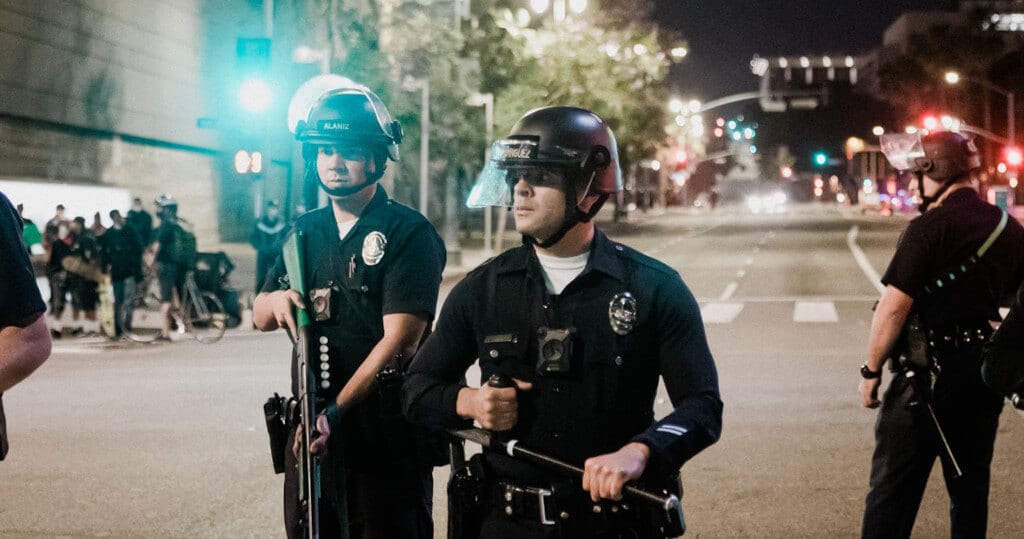
To lawfully detain or arrest someone, an officer must have legal authority and show it through clear identification and lawful conduct.
Search and Arrest Warrants
A warrant for a search or arrest is issued only when authorities show probable cause that a crime has been committed and that evidence or a suspect is likely to be found.

Where “authorities can show probable cause,” a warrant can be issued. A judge or magistrate will look closely at why a request for a warrant is being made and the supporting evidence before issuing one.

Warrantless searches may occur only under exigent circumstances or other recognized exceptions, such as consent or items in plain view. Also, there must be no use of unnecessary force. “Reasonableness” is a basic tenet of the law as it applies to the 4th Amendment.
The Framing of the 4th Amendment
In framing the Fourth Amendment, the Founding Fathers were concerned with a fundamental human right. That is the right not to be arrested, searched, or have property seized without good reason.

This provision is at the core of a civilized country’s beliefs, and the early legislators knew they had to guarantee this fundamental freedom for all.
It remains relevant today, especially where electronic surveillance and homeland security are of paramount concern.
4th Amendment Lesson Plan:
We have created a PDF of a 4th Amendment Lesson Plan for you. The PDF is both downloadable and printable.
External Resources:
- https://www.law.cornell.edu/constitution/fourth_amendment
Cornell Law School’s Legal Information Institute provides the full text of the Fourth Amendment along with annotations and interpretations, making it a reliable source for understanding the constitutional provision. - https://www.archives.gov/founding-docs/bill-of-rights/what-does-it-say
The National Archives provides authoritative information on the Bill of Rights, including the Fourth Amendment, and explains its framing and intent, which supports the blog post’s historical claims. - https://www.britannica.com/topic/Fourth-Amendment
Encyclopaedia Britannica provides a comprehensive overview of the Fourth Amendment, including its historical roots in English law, which supports the blog post’s claim about the influence of English legal practices on American law.
Related Supreme Court Cases to the Fourth Amendment
Explore the 27 Constitutional Amendments
- 1st Amendment
- 2nd Amendment
- 3rd Amendment
- 4th Amendment
- 5th Amendment
- 6th Amendment
- 7th Amendment
- 8th Amendment
- 9th Amendment
- 10th Amendment
- 11th Amendment
- 12th Amendment
- 13th Amendment
- 14th Amendment
- 15th Amendment
- 16th Amendment
- 17th Amendment
- 18th Amendment
- 19th Amendment
- 20th Amendment
- 21st Amendment
- 22nd Amendment
- 23rd Amendment
- 24th Amendment
- 25th Amendment
- 26th Amendment
- 27th Amendment






4 Responses
How can asset forfeiture laws possibly be reconciled in light of the wording of the fourth? In many cases there are no charges even filed and the confiscating authorities are the ones receiving value of assets taken. This is stealing under cover of authority.
whatz the ‘probable cause’ or suspected criminal activity that was relied upon for the warrant to search trumps place ?? did the warrant describe & articulate with details & specify what was to be siezed ?
what judge or magistrate authorized the search warrant ?
What authority or law did the FBI rely on to apply for a search warrant ?
is the affidavit and/or search warrant request & the jusge-signed warrant a ‘public document’ ??? if so can it be obtained by an PRR or Public Records Request ??? or some other public records request ; like under the Freedom of Information Act ???
Can a child allow people into your home for searches?
If a search warrant was issued to search person for narcotics, and when they were searched, nothing was found on the person why or can they still be arrested? shouldnt they be set free without being arrested?